
The idea of home ownership in India is undergoing a meaningful transformation. Traditionally, property ownership and financial decisions were often centered around male earning members of the family. However, changing economic realities, rising financial awareness, and evolving family dynamics are now encouraging households to adopt a more inclusive approach toward long-term asset creation.
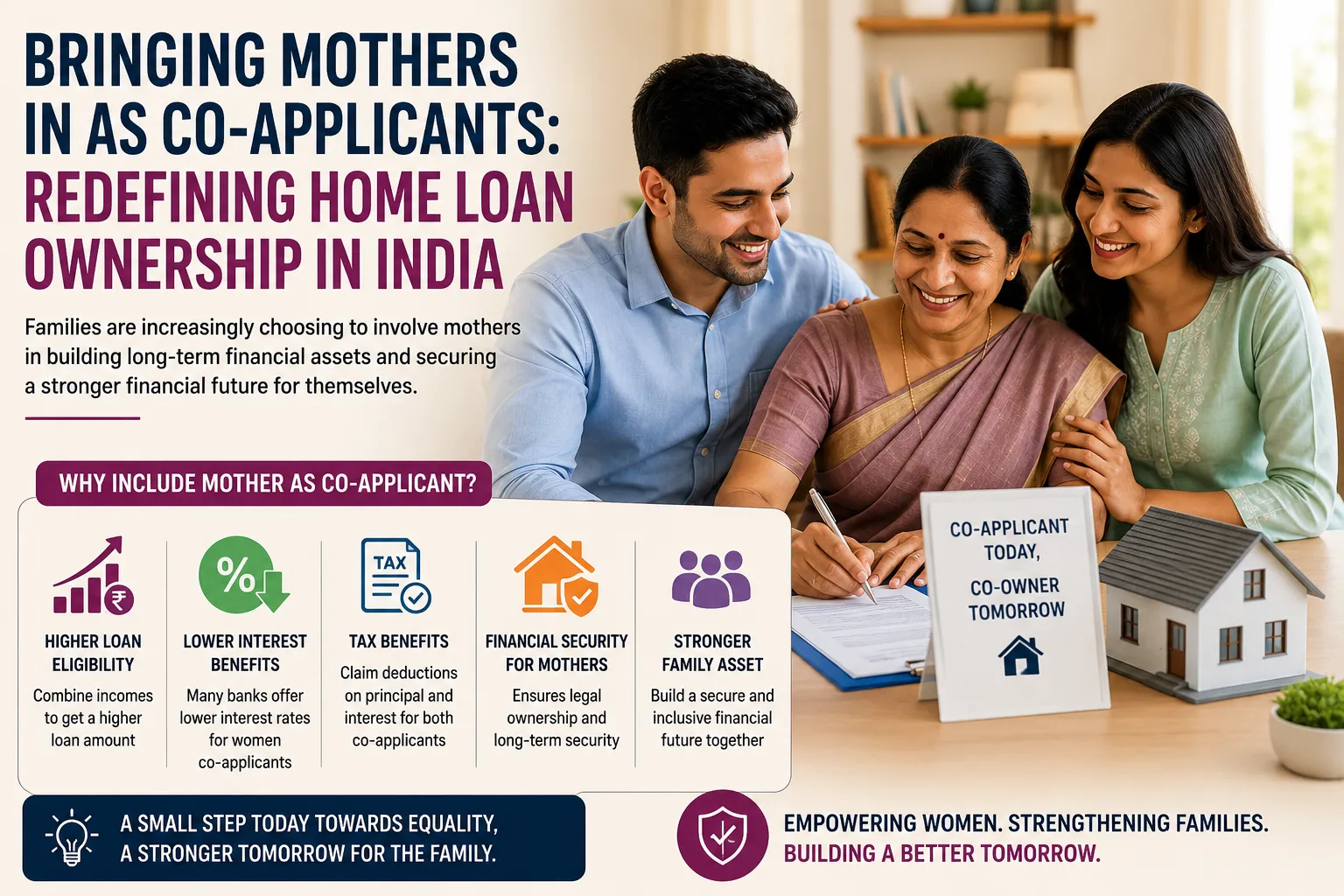
One of the most notable trends emerging in India’s housing and banking sector is the growing preference for adding mothers as co-applicants in home loans. Families across urban and semi-urban India are increasingly involving mothers not just emotionally, but financially, in property ownership and home financing decisions.
This shift is more than a banking strategy. It reflects changing attitudes toward women’s financial participation, intergenerational security, tax planning, and family wealth management. Banks and financial institutions have also supported this trend by offering benefits for women co-owners, making joint ownership arrangements more attractive.
The movement toward including mothers in home loan structures signals a broader social and economic change where financial empowerment and family asset ownership are becoming more collaborative.
Why Families Are Adding Mothers as Co-Applicants
Several factors are driving the growing trend of involving mothers in home loans.
For many families, adding the mother as a co-applicant strengthens:
- Loan eligibility
- Financial security
- Tax advantages
- Property ownership rights
- Long-term family planning
This approach is especially common among salaried individuals and middle-class households purchasing homes in rapidly growing urban areas.
In many cases, mothers may not even contribute directly to loan repayments, but their inclusion provides strategic financial and legal benefits that improve the overall loan structure.
The trend also reflects a changing mindset where women are increasingly recognized as equal stakeholders in family wealth creation.
Improved Home Loan Eligibility
One of the biggest reasons families choose joint home loans is improved loan eligibility.
Banks calculate loan approval amounts based on the combined income of applicants. If the mother has:
- Pension income
- Rental income
- Salary income
- Business income
it can significantly increase the family’s borrowing capacity.
A higher eligible loan amount helps families:
- Purchase larger homes
- Afford better locations
- Access improved amenities
- Reduce immediate financial pressure
Even when mothers are homemakers or retired, some banks may still consider certain income sources or financial stability factors while evaluating the loan application.
This makes co-application an important financial planning tool.
Benefits for Women Co-Owners
Financial institutions in India have increasingly encouraged female participation in home ownership.
Many banks and housing finance companies offer:
- Lower home loan interest rates for women
- Reduced processing fees
- Better loan terms
- Easier approval structures
Although the difference in interest rates may appear small, over long loan tenures the savings can become substantial.
In addition, several Indian states provide lower stamp duty charges for properties registered in the name of women. This can reduce overall property registration costs significantly.
As a result, families often include mothers as co-owners to benefit from these financial incentives while also strengthening women’s legal ownership rights.
Strengthening Financial Security for Mothers
Including mothers in home ownership arrangements also has an emotional and social dimension.
In many Indian families, mothers spend decades contributing to household stability without directly participating in formal asset ownership. Joint property ownership allows families to provide mothers with:
- Greater financial security
- Legal ownership rights
- Long-term protection
- Emotional recognition
This becomes especially important in situations involving:
- Retirement planning
- Family inheritance
- Medical emergencies
- Future financial uncertainty
For many households, adding mothers as co-applicants is now viewed as both a practical and respectful financial decision.
Changing Family Dynamics in India
Indian family structures are evolving rapidly due to:
- Urbanization
- Rising education levels
- Increased female financial awareness
- Growing middle-class aspirations
Financial decisions are no longer made solely by one earning member. Instead, modern households increasingly adopt collaborative planning involving multiple family members.
Women today are:
- More financially informed
- More involved in investment decisions
- Actively participating in wealth creation
- Seeking greater financial independence
This broader cultural shift is influencing home ownership patterns across the country.
Including mothers in home loans symbolizes this transition toward shared financial responsibility and inclusive family planning.
Tax Benefits of Joint Home Loans
Joint home loans can also provide important tax benefits under Indian income tax laws.
When both applicants contribute financially toward the loan repayment, each may separately claim deductions on:
- Principal repayment
- Interest payments
This can help families reduce overall tax liability significantly.
In cases where the mother has taxable income, joint ownership structures may create additional tax planning advantages.
However, financial experts advise families to carefully understand:
- Ownership ratios
- Repayment contributions
- Legal documentation
- Tax compliance rules
before finalizing joint loan structures.
Proper planning ensures maximum financial efficiency and avoids future legal complications.
Banks Encouraging Women-Centric Ownership
India’s banking and housing finance sector has increasingly promoted women-centric financial products.
This push aligns with broader national goals around:
- Financial inclusion
- Women empowerment
- Asset ownership equality
- Economic participation
Several lenders actively encourage female co-ownership because studies suggest women borrowers often demonstrate:
- Better repayment discipline
- Lower default rates
- Greater long-term financial stability
As a result, women co-applicants are now seen not only as beneficiaries but also as financially reliable participants in the lending ecosystem.
This institutional support has accelerated the trend significantly in recent years.
Legal and Ownership Considerations
While involving mothers as co-applicants offers many benefits, families must also understand the legal implications.
Property ownership creates legal rights and responsibilities. Before adding a co-owner, families should clearly discuss:
- Ownership shares
- Future inheritance planning
- Property transfer issues
- Loan repayment obligations
Legal clarity is important to prevent future disputes among family members.
Financial advisors often recommend:
- Proper legal documentation
- Transparent ownership agreements
- Will planning
- Professional financial consultation
These steps help ensure that joint ownership arrangements remain beneficial for all parties involved.
Emotional Value Beyond Financial Planning
The growing trend of including mothers in property ownership is not only about financial benefits — it also carries strong emotional significance.
For many families, home ownership represents:
- Stability
- Security
- Family legacy
- Emotional achievement
Adding mothers as co-owners acknowledges their contribution to the family’s growth and sacrifices over the years.
This symbolic recognition strengthens emotional bonds while also improving long-term financial protection.
In many cases, younger generations now actively prioritize ensuring that mothers have independent legal ownership rights in family assets.
Women’s Financial Empowerment in Modern India
The trend also reflects India’s larger journey toward women’s financial empowerment.
Across sectors, women are increasingly:
- Opening bank accounts
- Investing in mutual funds
- Purchasing insurance
- Managing businesses
- Participating in financial decisions
Government initiatives, banking reforms, and digital financial access have further accelerated this shift.
Property ownership remains one of the most important forms of wealth creation in India. Therefore, increasing women’s participation in home ownership has long-term economic and social significance.
By involving mothers in home loan structures, families are helping bridge historical gender gaps in asset ownership.
Challenges Still Remain
Despite growing progress, challenges continue in achieving equal financial participation.
Many women, especially older homemakers, still face:
- Limited financial literacy
- Lack of independent income
- Dependence on male family members
- Limited awareness of legal rights
Cultural attitudes in some regions also continue restricting women’s direct involvement in property matters.
However, awareness is gradually improving as financial education expands and younger generations adopt more inclusive approaches.
The rising popularity of joint ownership arrangements indicates that societal attitudes are slowly changing.
The Future of Collaborative Home Ownership
Experts believe collaborative property ownership will become increasingly common in India over the coming decade.
Factors driving this trend include:
- Rising real estate prices
- Higher loan requirements
- Tax efficiency planning
- Growing financial awareness
- Women’s increasing economic participation
Banks are also expected to launch more customized products supporting family-based and women-inclusive home ownership models.
As home ownership evolves, families may continue moving away from traditional single-owner structures toward more collaborative financial planning systems.
Conclusion
The growing trend of bringing mothers in as co-applicants for home loans represents a significant shift in India’s financial and social landscape. What was once viewed primarily as a technical banking decision is now becoming a symbol of inclusive wealth creation, financial empowerment, and family security.
By involving mothers in property ownership, families are not only improving loan eligibility and accessing financial benefits but also recognizing women’s central role in building long-term stability and prosperity.
As India’s economic and cultural landscape continues evolving, collaborative financial planning and shared asset ownership are likely to become even more important. The inclusion of mothers in home loan structures reflects a broader transformation toward equality, financial awareness, and more balanced family wealth management in modern India.
hutdailynews hutdailynews hutdailynews hutdailynews hutdailynews hutdailynews hutdailynews hutdailynews hutdailynews hutdailynews hutdailynews hutdailynews hutdailynews hutdailynews hutdailynews hutdailynews hutdailynews hutdailynews hutdailynews hutdailynews hutdailynews hutdailynews hutdailynews hutdailynews hutdailynews hutdailynews hutdailynews hutdailynews hutdailynews hutdailynews hutdailynews hutdailynews hutdailynews hutdailynews hutdailynews hutdailynews hutdailynews hutdailynews hutdailynews hutdailynews hutdailynews hutdailynews hutdailynews hutdailynews hutdailynews hutdailynews hutdailynews hutdailynews hutdailynews hutdailynews hutdailynews hutdailynews hutdailynews hutdailynews hutdailynews hutdailynews hutdailynews hutdailynews hutdailynews hutdailynews hutdailynews hutdailynews hutdailynews hutdailynews hutdailynews hutdailynews hutdailynews hutdailynews hutdailynews hutdailynews hutdailynews hutdailynews hutdailynews hutdailynews hutdailynews hutdailynews hutdailynews hutdailynews hutdailynews hutdailynews hutdailynews hutdailynews hutdailynews hutdailynews hutdailynews hutdailynews hutdailynews hutdailynews hutdailynews hutdailynews hutdailynews hutdailynews hutdailynews hutdailynews hutdailynews hutdailynews hutdailynews hutdailynews hutdailynews hutdailynews hutdailynews hutdailynews hutdailynews hutdailynews hutdailynews hutdailynews hutdailynews hutdailynews hutdailynews hutdailynews hutdailynews hutdailynews hutdailynews hutdailynews hutdailynews hutdailynews hutdailynews hutdailynews hutdailynews hutdailynews hutdailynews hutdailynews hutdailynews hutdailynews hutdailynews hutdailynews hutdailynews hutdailynews hutdailynews hutdailynews hutdailynews hutdailynews hutdailynews hutdailynews hutdailynews hutdailynews hutdailynews hutdailynews hutdailynews hutdailynews hutdailynews hutdailynews hutdailynews hutdailynews hutdailynews hutdailynews hutdailynews hutdailynews hutdailynews hutdailynews hutdailynews hutdailynews hutdailynews hutdailynews hutdailynews hutdailynews hutdailynews hutdailynews hutdailynews hutdailynews hutdailynews hutdailynews hutdailynews hutdailynews hutdailynews hutdailynews hutdailynews hutdailynews hutdailynews hutdailynews hutdailynews hutdailynews hutdailynews hutdailynews hutdailynews hutdailynews hutdailynews hutdailynews hutdailynews hutdailynews hutdailynews hutdailynews hutdailynews hutdailynews hutdailynews hutdailynews