

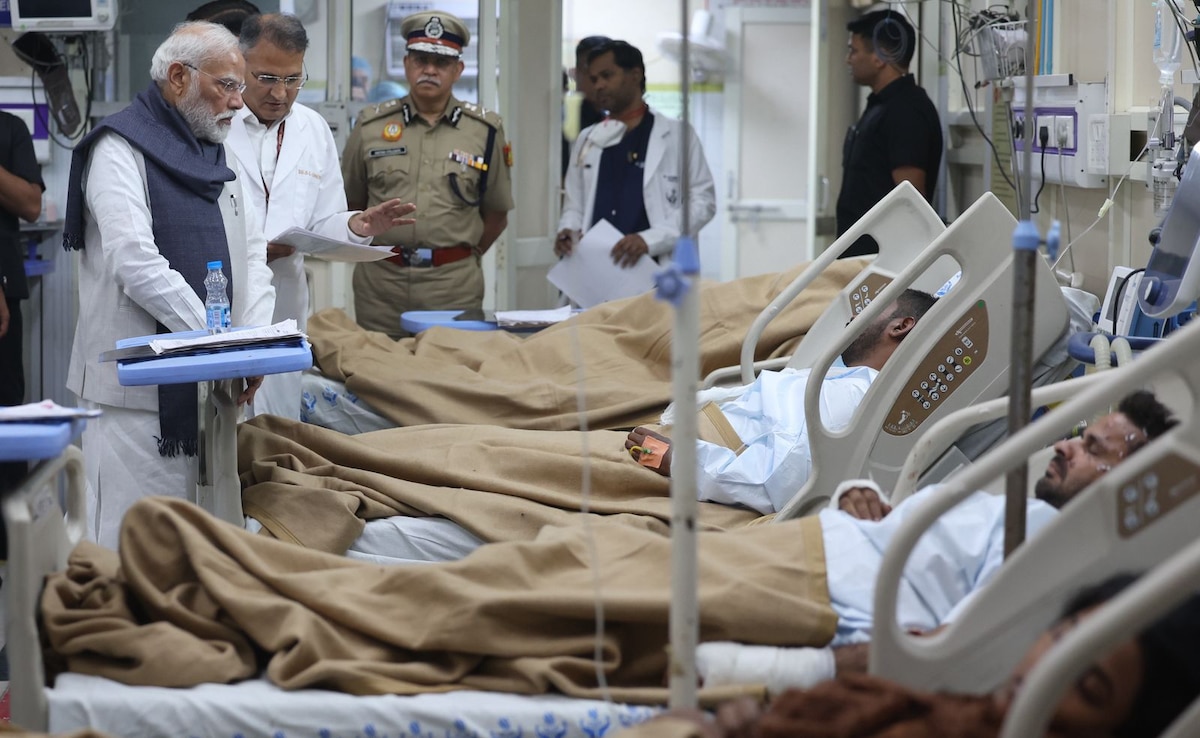
Prime Minister Narendra Modi visited the survivors of the recent Red Fort blast at Lok Nayak Jai Prakash Narayan (LNJP) Hospital in Delhi late Tuesday night, immediately after returning from his two-day state visit to Bhutan. The Prime Minister’s visit was a gesture of compassion and reassurance, as the nation continues to grapple with the shock of the deadly explosion near the historic monument.
A Direct Visit from the Airport
According to government officials, PM Modi landed in Delhi around 9:30 p.m. from Paro, Bhutan. Instead of heading home or to his office, he drove straight to LNJP Hospital to meet the victims injured in the Red Fort blast. Security was heightened around the hospital during his visit, with Delhi Police and Special Protection Group (SPG) personnel taking charge of the area.
Hospital sources confirmed that the Prime Minister spent time speaking individually to the injured and their families. He inquired about their treatment, recovery progress, and assured them that all possible medical assistance would be provided by the central government. Doctors briefed him on the condition of each patient, several of whom remain in critical care units due to burn and shrapnel injuries.
uesource.com | luxuryescortservies.in | CrystalLyre.com
traveltipses.com | hiddeninlightphotography.com
Red Fort Blast: What Happened
The explosion took place on November 10 near the Red Fort metro station in central Delhi, a high-security zone that usually sees heavy tourist traffic and daily commuters. Initial reports suggest that the blast occurred inside a parked vehicle—a red Ford EcoSport—that suddenly caught fire and exploded. The incident left multiple people dead and several injured, shaking the capital city.
Investigations by the Delhi Police Special Cell and National Investigation Agency (NIA) have pointed toward possible terror links. However, officials are still verifying the nature of the explosive material and the motive behind the attack. A massive manhunt is underway to trace another vehicle, a red Ford EcoSport bearing registration number DL10CK0458, believed to be linked to the prime suspect in the case.
PM’s Message: Nation Stands United
During his hospital visit, PM Modi expressed deep concern for the victims and reiterated that those behind the attack would not be spared. “The government stands with the families of the victims and will ensure that the culprits face the strictest punishment,” he reportedly said to hospital officials.
He also commended the swift action of the Delhi Police, NDRF, and medical teams who responded within minutes of the explosion. “Such cowardly acts only strengthen our resolve to fight terrorism in all forms,” the Prime Minister added.
Government’s Immediate Response
Soon after the blast, the Ministry of Home Affairs (MHA) convened an emergency meeting to assess the situation. Home Minister Amit Shah chaired the meeting with top intelligence and security officials. Delhi Police Commissioner Sanjay Arora presented a preliminary report detailing how the incident unfolded and what steps are being taken to prevent any further attacks.
The Delhi government has announced compensation for the victims. Families of the deceased will receive ₹10 lakh each, while the injured will be provided with ₹2 lakh. The hospital administration has also been directed to prioritize their treatment and ensure that no patient faces any delays due to financial constraints.
Public Reaction and Security Measures
The Red Fort area, a popular tourist destination, has been sealed off temporarily for detailed forensic analysis. Metro services between Lal Qila and Jama Masjid stations were briefly suspended after the incident but resumed the next morning under tight security.
Locals described the explosion as “terrifying,” with some reporting that the blast was so loud it shattered nearby windows. “We thought it was a gas cylinder burst at first, but soon realized it was something much more serious,” said a shopkeeper from Chandni Chowk.
In light of the attack, Delhi Police have increased vigilance across the city. Vehicles are being checked thoroughly, especially around sensitive government installations and public places. The NIA has also deployed a special forensic team to collect evidence from the scene.
Opposition’s Reaction and Political Response
Opposition leaders across parties condemned the blast and expressed solidarity with the victims. Congress leader Mallikarjun Kharge tweeted, “Terror has no place in our society. We stand with the victims of the Red Fort blast and urge the government to ensure a fair investigation.”
Delhi Chief Minister Arvind Kejriwal, who also visited the hospital earlier in the day, said, “This is a tragedy that affects us all. I have directed our hospitals to provide the best treatment possible to every injured person. We must all stay vigilant.”
BJP leaders praised the Prime Minister for his quick response and compassionate gesture, noting that it sent a strong message of unity and leadership during a time of national distress.
Bhutan Visit and Swift Return
PM Modi’s Bhutan visit earlier this week focused on strengthening bilateral ties between India and Bhutan. He attended cultural programs, inaugurated developmental projects, and held talks with Bhutanese Prime Minister Tshering Tobgay. His return to Delhi was scheduled late Tuesday evening, but the unfolding tragedy in the capital prompted his immediate visit to the hospital upon arrival.
Analysts have noted that such a move underscores Modi’s emphasis on emotional connection and direct outreach during crises. Political observers believe his hospital visit was aimed at reassuring citizens and showing solidarity with victims and first responders.
Looking Ahead
As the investigation continues, security agencies remain on high alert. Delhi Police officials have appealed to the public for any information that could help identify suspects or suspicious activities near the Red Fort area prior to the explosion.
Experts have called for a deeper look into how such an attack could occur in a high-security zone like central Delhi. They have also urged authorities to strengthen urban surveillance, including more CCTVs, better traffic monitoring, and improved coordination among agencies.
For now, the focus remains on supporting the survivors and bringing the perpetrators to justice. As the capital mourns the tragedy, PM Modi’s hospital visit serves as a reminder that leadership during crisis often means standing beside the people — not just addressing them from afar.
